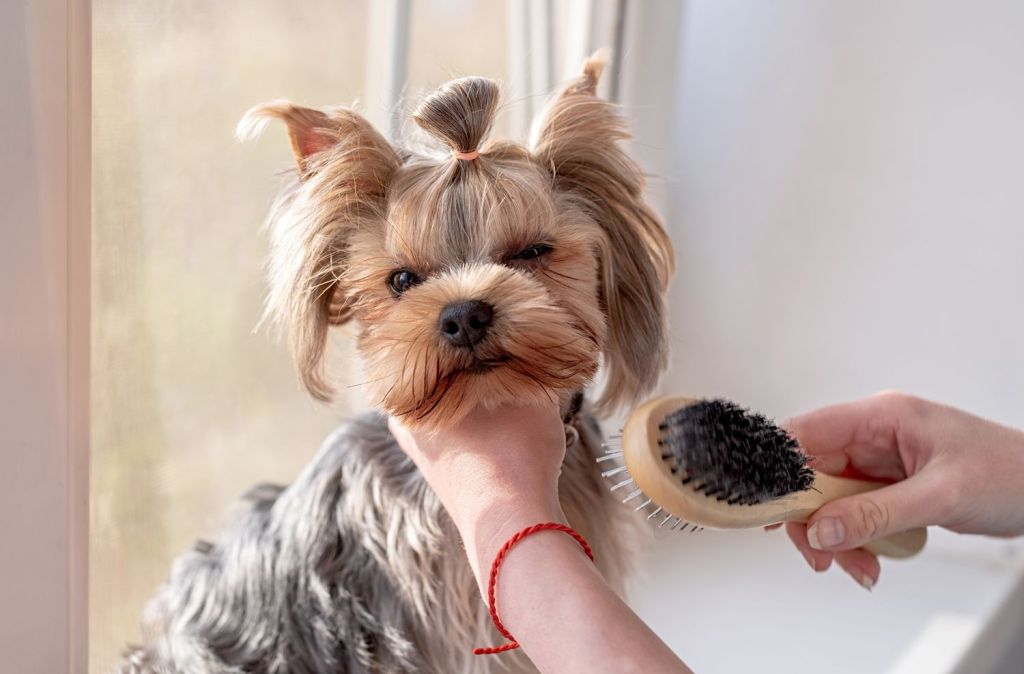
Combing a dog’s hair is an important aspect of dog grooming. Regular combing of your dog’s hair can help prevent matting, keep the skin healthy, and help identify any skin issues. However, not all combs and brushes are created equal, and different types of hair require different tools. In this article, we’ll explore the different types of dog hair and the types of combs and brushes that are best for each.
Understanding Your Dog’s Hair Type
The first step in choosing the right comb or brush for your dog is to identify the type of hair your dog has. Some breeds have a single coat, while others have a double coat. Dogs with single coats have hair that grows to a certain length and then stops. Dogs with double coats have two layers of hair: a soft, downy undercoat and a longer, coarser outer coat.
Combing Tools for Single Coats
For dogs with single coats, a slicker brush is a good choice. These brushes have fine, short wires close together and are designed to remove loose hair and prevent matting. A pin brush with long, flexible bristles is also a good choice for dogs with single coats. Pin brushes can be used to remove dead hair and distribute natural oils throughout the coat.
Combing Tools for Double Coats
For dogs with double coats, a slicker brush and undercoat rake are recommended. The slicker brush can be used to remove dead hair and prevent matting, while the undercoat rake is designed to remove loose undercoat without damaging the topcoat.
Combing Tools for Curly Hair
Dogs with curly hair, such as poodles, require a different type of comb. A wide-toothed comb is ideal for these dogs as it can help to separate and untangle curls without breaking them. It is important to avoid using a brush on curly hair, as this can cause the curls to separate and become frizzy.
Combing Tools for Short Hair
Dogs with short hair, such as bulldogs, require a soft-bristled brush. These brushes are gentle on the skin and can help to remove loose hair and dirt. It is important to avoid using a slicker brush on short-haired dogs, as this can irritate the skin.
Proper Combing Technique
When combing your dog’s hair, it is important to start at the head and work your way down. This will help to prevent matting and tangles. Be sure to use gentle strokes and avoid pulling on the hair. If you encounter a mat or tangle, use your fingers to gently separate the hair before using a comb or brush.
Frequency of Combing
Combing your dog’s hair should be a regular part of your grooming routine. How often you comb your dog’s hair will depend on the type of hair your dog has and how fast it grows. For example, dogs with double coats may need to be combed more frequently during shedding season.
Conclusion
Combing your dog’s hair may seem like a small task, but it is an important part of keeping your dog healthy and happy. By choosing the right comb or brush for your dog’s hair type and using gentle strokes, you can prevent matting, keep the skin healthy, and identify any skin issues. Regular combing will also help to strengthen the bond between you and your furry friend.

 The Pup Post - Your Ultimate Guide to Happy and Healthy Dogs