The image is as heartbreaking as it is endearing: a tiny, wide-eyed Japanese macaque named Punch, huddled in the corner of his enclosure, arms wrapped tightly around a plush IKEA orangutan. After being tragically rejected by his biological mother at the Ichikawa City Zoo, Punch didn’t just find a toy; he found a lifeline. Clinging to the long, fuzzy limbs of his “Ora-mama,” the infant monkey found the “contact comfort” necessary to survive the crushing isolation of his early days.
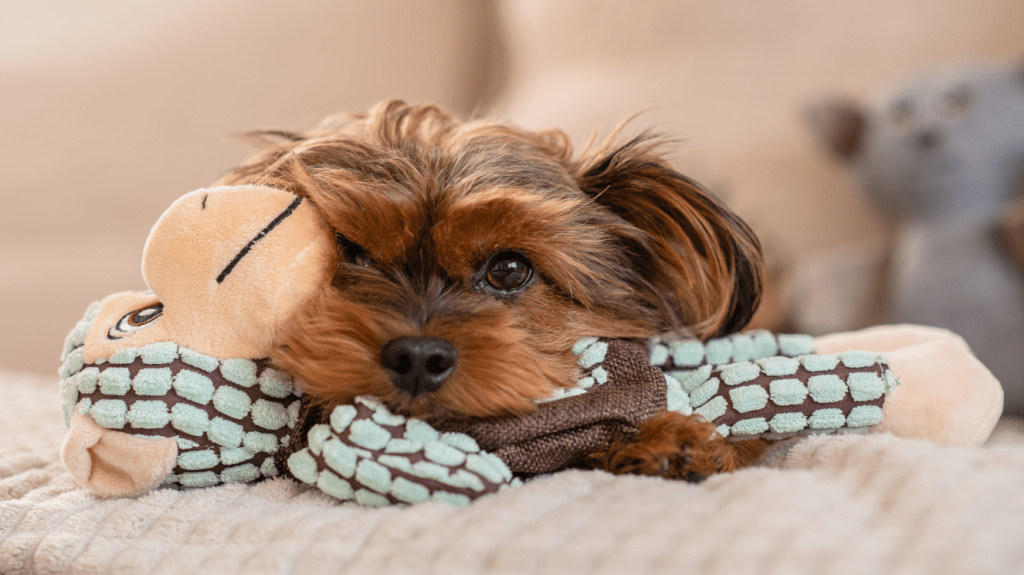
But you don’t have to visit a zoo to witness this kind of soul-stirring attachment. Millions of dog owners see “Punch-like” behavior every single day in their own living rooms. It’s the Golden Retriever who refuses to take a nap without his tattered teddy bear, or the nervous rescue pup who rhythmically “nurses” on a specific fleece blanket to soothe his transition into a new home.
While it might look like mere play, there is a profound biological bridge between a grieving monkey in Japan and a pampered pooch on your sofa. By exploring the “clinging reflex”—a primal survival instinct shared by primates and canines alike—we can begin to understand why these “surrogate mothers” are far more than just toys. They are vital tools for emotional regulation, providing the security and sensory input necessary for a developing brain to feel safe in a big, sometimes scary world.
The Science of the “Clinging Reflex”
To understand why a stuffed toy can save a life, we have to look at the brain. In the 1950s, psychologist Harry Harlow conducted famous (and controversial) experiments with rhesus monkeys that changed how we view bonding. He discovered that infant monkeys would choose a soft, cloth “surrogate mother”—even one that provided no food—over a wire “mother” that held a nursing bottle. This proved that contact comfort is a primary biological need, often more urgent than hunger itself.
For Punch the monkey, that IKEA orangutan wasn’t a plaything; it was a sensory replacement for his mother’s heartbeat and fur. This same “clinging reflex” is hardwired into our dogs, though it manifests in slightly different ways:
The “Mouth-Touch” Connection: While primates use their hands to cling, dogs use their mouths. “Nursing” on a blanket or carrying a toy isn’t just a habit; it’s a sensory-motor loop that tells the canine brain: “I am safe. I am grounded.”
The Denning Instinct: In the wild, puppies spend their first weeks in a literal “pile” of siblings. This constant physical contact regulates their body temperature and heart rate. When a dog is separated from its litter—especially if it happens too early—a soft plush toy becomes a mechanical substitute for that missing “pile.”
Tactile Stimulation: Just as Punch’s brain transitioned from “panic mode” to “growth mode” once he had something to hold, a dog’s nervous system responds to soft textures. Nuzzling or carrying a toy triggers the release of oxytocin, the “bonding hormone,” which naturally lowers cortisol (the stress hormone).
When a Toy Becomes a “Baby”
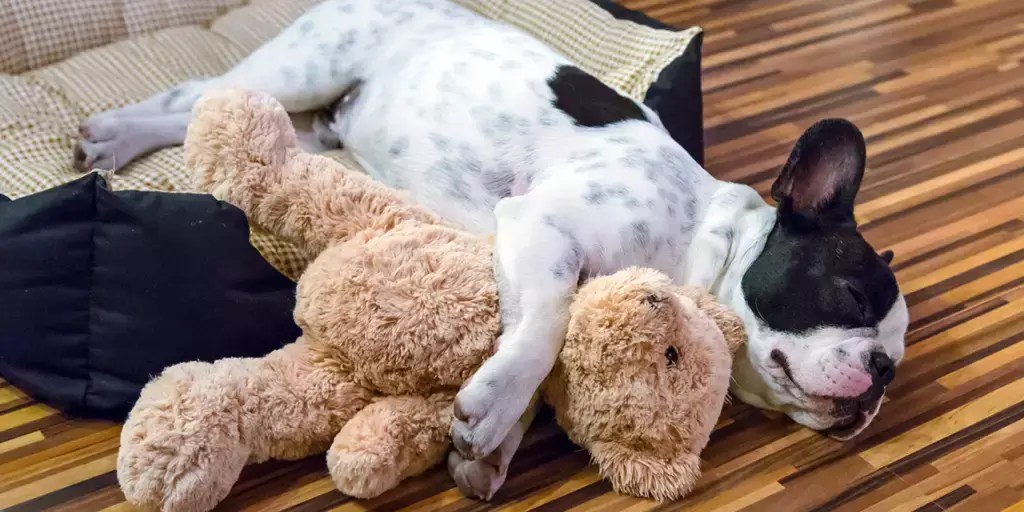
For many owners, the attachment goes beyond simple comfort—it looks like a job. You might notice your dog “mothering” their toy, gently cleaning it, or even crying if it’s put in the washing machine.
Security Blanket Effect: Have you ever noticed your dog grabbing their favorite toy the moment you walk through the door? This is a “displacement behavior.” The excitement of your arrival is overwhelming, and the toy acts as a grounding wire—a familiar scent and texture that helps them manage their big emotions.
Early Weaning & Rescue Backgrounds: Dogs taken from their mothers before the eight-week mark (or those born in stressful environments like puppy mills) are significantly more likely to develop an intense, lifelong attachment to a “surrogate.” Like Punch, they missed the critical window of maternal reassurance and are essentially “re-parenting” themselves through their toys.
Is it Healthy? (The Key Insight)
The short answer is: Yes. Zoo keepers didn’t give Punch a stuffed animal to “spoil” him; they gave it to him to stabilize his mental health so he could eventually integrate with other monkeys. Similarly, a dog’s attachment to a comfort object is a sign of a high-functioning coping mechanism. It shows that the dog has found a way to self-soothe rather than spiraling into destructive anxiety (like chewing furniture or constant barking).
As long as your dog isn’t aggressively guarding the toy or eating the stuffing (which can be a choking hazard), this “surrogate mother” is a wonderful bridge to a more confident, happy life.
Buyer’s Guide: The Best Stuffed Toys for Anxious Dogs
Just as the Ichikawa City Zoo staff carefully selected the IKEA orangutan for its soft limbs and “huggable” size, you should look for specific features when buying a surrogate for your dog. A good comfort toy for an anxious dog isn’t just a chew toy—it’s a sensory tool.
Mental Distraction (Snuffle Toys): If your dog’s anxiety is rooted in boredom or separation, “snuffle” plushies that hide treats inside (like the Outward Hound Hide-A-Squirrel) allow them to use their nose—a naturally calming activity—while still having a soft object to carry around afterward.
The “Littermate” Experience (Heartbeat Toys): For puppies or rescues who have never known a mother’s touch, the Snuggle Puppy is the gold standard. It features a “Real-Feel” pulsing heartbeat and a heat pack that mimics the warmth of a living body. Many owners report that their dogs stop whimpering within minutes of snuggling up to one.
The Weighted Hug: Much like weighted blankets help humans with anxiety, weighted plushies (like the Lilly’s Love or Brease collections) provide “Deep Pressure Therapy.” The gentle weight helps ground a dog’s nervous system, making them feel physically secure during storms or fireworks.
The IKEA Factor (Long-Limbed Toys): Many dogs, like Punch, prefer toys with long, floppy limbs. The IKEA DJUNGELSKOG (the very one Punch uses) is surprisingly popular with dog owners because the long arms allow dogs to “interlock” with the toy, creating a feeling of being embraced.
More Than Just a Toy
The story of Punch the monkey reminds us that the need for connection is universal. Whether it’s a baby macaque in Japan or a rescue dog in your kitchen, the search for safety often leads to a soft, stuffed friend.
When you see your dog “mothering” their favorite toy or refusing to sleep without their “baby,” remember that they aren’t being silly or regressive. They are using a tool to navigate a world that can sometimes feel overwhelming. A stuffed orangutan didn’t just give Punch something to hold—it gave him the emotional foundation to eventually grow brave enough to join his troop. By respecting your dog’s “surrogate mother,” you’re giving them that same chance to find their courage, one hug at a time.

 The Pup Post - Your Ultimate Guide to Happy and Healthy Dogs