
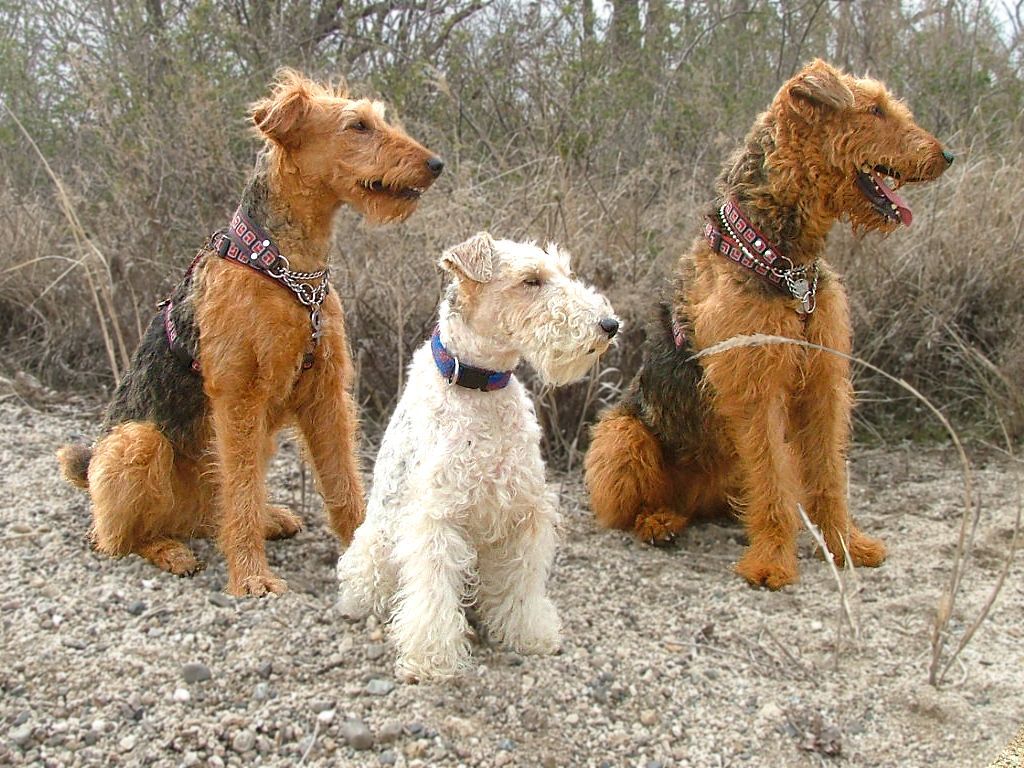
The Airedale Terrier, also known as the “King of Terriers,” is a breed of dog that originated in the Aire Valley of Yorkshire, England. They are the largest of the terrier breeds and are known for their intelligence, courage, and loyalty.
The Airedale Terrier was developed in the mid-19th century by crossing the Otterhound with various terrier breeds, including the Welsh Terrier and the Black and Tan Terrier. Originally, the breed was used for hunting small game, such as rodents and foxes, and for retrieving game birds. They were also used as police dogs and as messenger dogs during World War I.
The breed’s popularity grew during the late 1800s and early 1900s, and they were often used as show dogs. Airedales were recognized by the American Kennel Club in 1888, and the breed has remained popular ever since. Today, Airedale Terriers are primarily kept as family pets but are still used in some working roles, such as search and rescue and as police dogs.

The Airedale Terrier is a medium to large-sized breed that typically weighs between 50-70 pounds and stands 22-24 inches tall at the shoulder. They have a sturdy and muscular build with a rectangular-shaped body. Their coat is wiry and dense, with a distinctive saddle-like marking on their back that is usually darker than the rest of their body. Airedales come in a variety of colors, including black and tan, grizzle, and tan.
Airedale Terriers are known for their lively and outgoing personality. They are intelligent, courageous, and playful, making them excellent companions for families with children. However, they can be stubborn at times and require consistent training to ensure they are well-behaved. Airedales have a strong prey drive and should be socialized early on to prevent any potential aggression towards other animals.
Airedale Terriers are highly intelligent and excel in obedience and agility training. They are quick learners and respond well to positive reinforcement techniques, such as treats and praise. However, they can be independent thinkers and may require extra patience and persistence during training sessions. Airedales are also natural problem-solvers and require mental stimulation to prevent boredom and destructive behavior.
The Airedale Terrier has a wiry, double coat that needs regular grooming to keep it in good condition. Brushing at least once a week with a slicker brush and comb is necessary to prevent matting and tangling. Regular trimming and stripping of the coat is also needed to maintain its texture and shape. The coat should be stripped twice a year, preferably by a professional groomer. Bathing can be done once every two months or as needed, but frequent bathing can strip the coat of its natural oils. Additionally, the ears should be checked regularly for signs of infection and cleaned as needed. Teeth should also be brushed regularly to prevent dental issues.
Airedale Terriers are active dogs and need regular exercise to stay healthy and happy. Daily exercise of at least one hour is recommended, which can include walks, runs, hikes, or playing fetch in a fenced yard. They also enjoy activities that engage their minds, such as puzzle toys and training sessions. Airedales thrive on socialization, and they enjoy spending time with their owners, so activities that involve interaction with people are also essential.

Airedale Terriers are intelligent dogs, but they can be independent and strong-willed, which can make training a challenge. Positive reinforcement methods, such as using treats and praise, work best with this breed. Consistency and patience are key, and training should be started early in life. Airedales can excel in obedience, agility, and other dog sports, so it’s essential to provide them with plenty of opportunities for mental and physical stimulation. Socialization is also crucial for this breed, as they can be wary of strangers and other dogs if not exposed to them early in life.
Airedale Terriers are generally healthy and have a lifespan of 10-13 years. However, like all breeds, they can be prone to certain health issues. Here are some health issues to be aware of in Airedale Terriers:
- Hip dysplasia: Airedales can be prone to hip dysplasia, a genetic condition in which the hip joint doesn’t develop properly.
- Skin allergies: Airedales can be prone to skin allergies, which can cause itching, redness, and hair loss.
- Cancer: Airedales have a higher incidence of cancer than some other breeds. Common types of cancer in Airedales include lymphoma, mast cell tumors, and osteosarcoma.
- Bloat: Airedales, like many large breeds, can be prone to bloat or gastric torsion, a life-threatening condition in which the stomach fills with gas and twists on itself.
Airedale Terriers are energetic dogs and require a balanced diet to maintain their health and energy levels. Here are some nutrition and diet recommendations for Airedale Terriers:
- High-quality dog food: Choose a high-quality dog food that is appropriate for your dog’s age, weight, and activity level. Look for a food that lists meat as the first ingredient.
- Portion control: Airedales can be prone to overeating, so it’s important to measure out their food portions and avoid overfeeding.
- Limited treats: While it’s okay to give your Airedale treats, be sure to limit them to avoid overfeeding and weight gain.
- Fresh water: Make sure your Airedale has access to fresh water at all times, especially during exercise or hot weather.
- Avoid table scraps: Table scraps can upset your Airedale’s digestive system and lead to obesity. Stick to a balanced diet of dog food and limited treats.
Airedale Terriers are known to be loyal, protective, and affectionate towards their families, making them great family pets. They are generally good with children and can tolerate the rough play that often comes with kids. However, it is important to supervise interactions between young children and Airedale Terriers to prevent any accidental injuries.
When it comes to other pets, Airedale Terriers have a strong prey drive and may not get along well with smaller animals like cats, rabbits, or guinea pigs. Early socialization and training can help reduce their prey drive, but it is important to always supervise interactions between Airedale Terriers and smaller animals.
Airedale Terriers are intelligent and active dogs that require proper training and socialization. For first-time owners, it is important to do your research and make sure you have the time and resources to commit to your Airedale Terrier’s needs.
Before bringing an Airedale Terrier into your home, make sure you have a solid training plan in place and are prepared to give them plenty of exercise and mental stimulation. Airedale Terriers are also known to have a stubborn streak, so patience and consistency are key when training them.
It is also important to find a reputable breeder or rescue organization to ensure your Airedale Terrier is healthy and has a good temperament.
Airedale Terriers are active dogs that require daily exercise and mental stimulation. They are not well-suited for apartment living and do best in homes with a yard where they can run and play.
When it comes to living conditions, Airedale Terriers can adapt to most environments as long as they receive enough exercise and attention. They do well in both rural and urban settings, but it is important to ensure they have access to plenty of outdoor space and opportunities for exercise.
Overall, Airedale Terriers thrive in homes where they are given plenty of love, attention, and exercise. They make great family pets for those who are willing to commit to their needs and provide them with a loving home.

The Airedale Terrier was originally bred in the 19th century in the Aire Valley of Yorkshire, England. They were bred by crossing the Otterhound and the Old English Terrier, and were primarily used as hunting dogs for catching rats, otters, and other small game. Airedales were also utilized as guard dogs for their loyalty and bravery. During World War I, they were even used as messenger and ambulance dogs on the battlefield.
Today, Airedale Terriers are still used as working dogs, particularly as service and police dogs. Due to their high intelligence and trainability, they are often trained as service dogs for people with disabilities or as therapy dogs in hospitals and nursing homes. Additionally, their strength, agility, and protective instincts make them ideal candidates for police and military work, including drug detection, search and rescue, and bomb detection. In fact, the Airedale Terrier is the largest breed of terrier and is often referred to as the “King of Terriers” for their versatility and adaptability to various working environments.
According to the American Kennel Club (AKC), Airedale Terriers currently rank as the 53rd most popular dog breed in the United States. However, this breed was more popular in the past and held the 20th spot in 1925.
The Airedale Terrier is recognized by various kennel clubs around the world, including:
- American Kennel Club (AKC)
- United Kennel Club (UKC)
- The Kennel Club (UK)
- Canadian Kennel Club (CKC)
- Australian National Kennel Council (ANKC)
- New Zealand Kennel Club (NZKC)
- Federation Cynologique Internationale (FCI)
These kennel clubs have established breed standards that outline the desired physical and temperament traits of the Airedale Terrier. Show dogs are evaluated based on how well they conform to these standards.
Summary of key points:
- The Airedale Terrier is a breed of dog that originated in Yorkshire, England.
- They are a medium-sized breed with a distinctive black and tan coat and a wiry texture.
- Airedale Terriers are known for their high energy levels, intelligence, and loyalty to their owners.
- They require regular grooming, exercise, and training to stay healthy and happy.
- Airedale Terriers can make excellent family pets and working dogs, but they may not be the best choice for everyone.
If you are considering adding an Airedale Terrier to your family, it is important to do your research and make sure that this breed is a good fit for your lifestyle and needs. Airedale Terriers can be wonderful companions and working dogs, but they require a lot of time, effort, and attention to thrive. Make sure you are prepared to provide your Airedale Terrier with the love, care, and training they need to live a happy and healthy life.


2 responses to “The Ultimate Guide to Airedale Terriers: History, Characteristics, and Care”
Great article on the Airedale Terrier breed – thanks for sharing!
LikeLiked by 1 person
Thank you so much for taking the time to read my article on Airedale Terriers! I’m thrilled to hear that you found it informative and enjoyable. Airedales are truly a remarkable breed with a fascinating history, and it was a pleasure to share some of that information with my readers. If you have any questions or comments about the breed, please don’t hesitate to let me know. Thanks again for your kind words!
LikeLike